
Freeform
Geomagic Freeform empowers designers to create complex, handcrafted-style sculptural and organic forms that are often too complex for traditional CAD systems.
By eliminating the need for costly, time-consuming physical-to-digital conversion workflows and reducing reliance on multiple software tools, Freeform streamlines the entire design cycle. It bridges the gap between artisanal design and modern digital manufacturing, making it the go-to solution for some of the world’s most recognised brands.
A complete path from concept to manufacturing
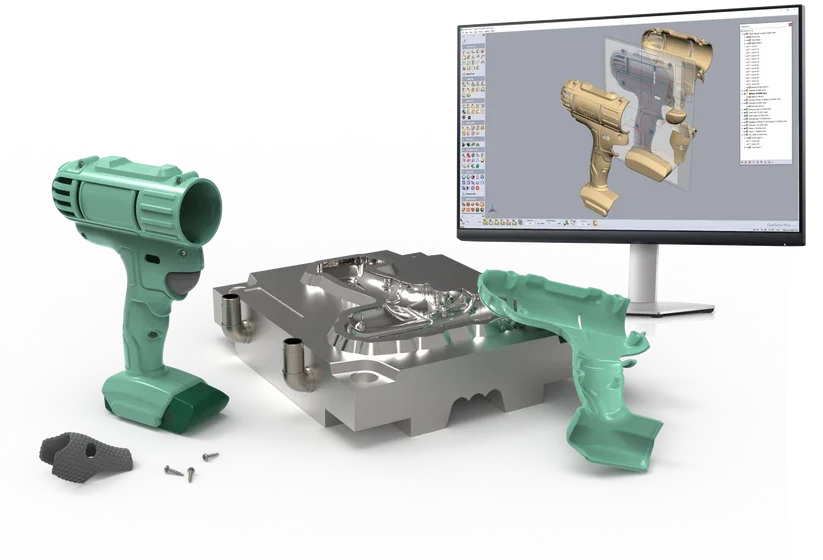
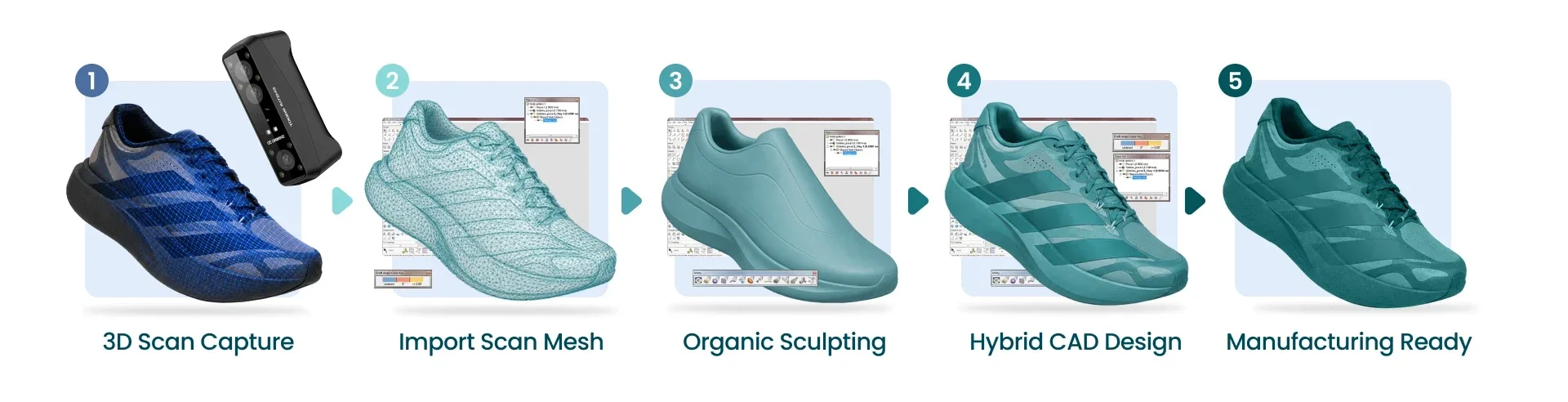
Freeform has the tools you need to make your organic object a tangible reality, with CAD outputs, tooling design, and parting line generation for the most complex organic shapes
Designing around existing shapes
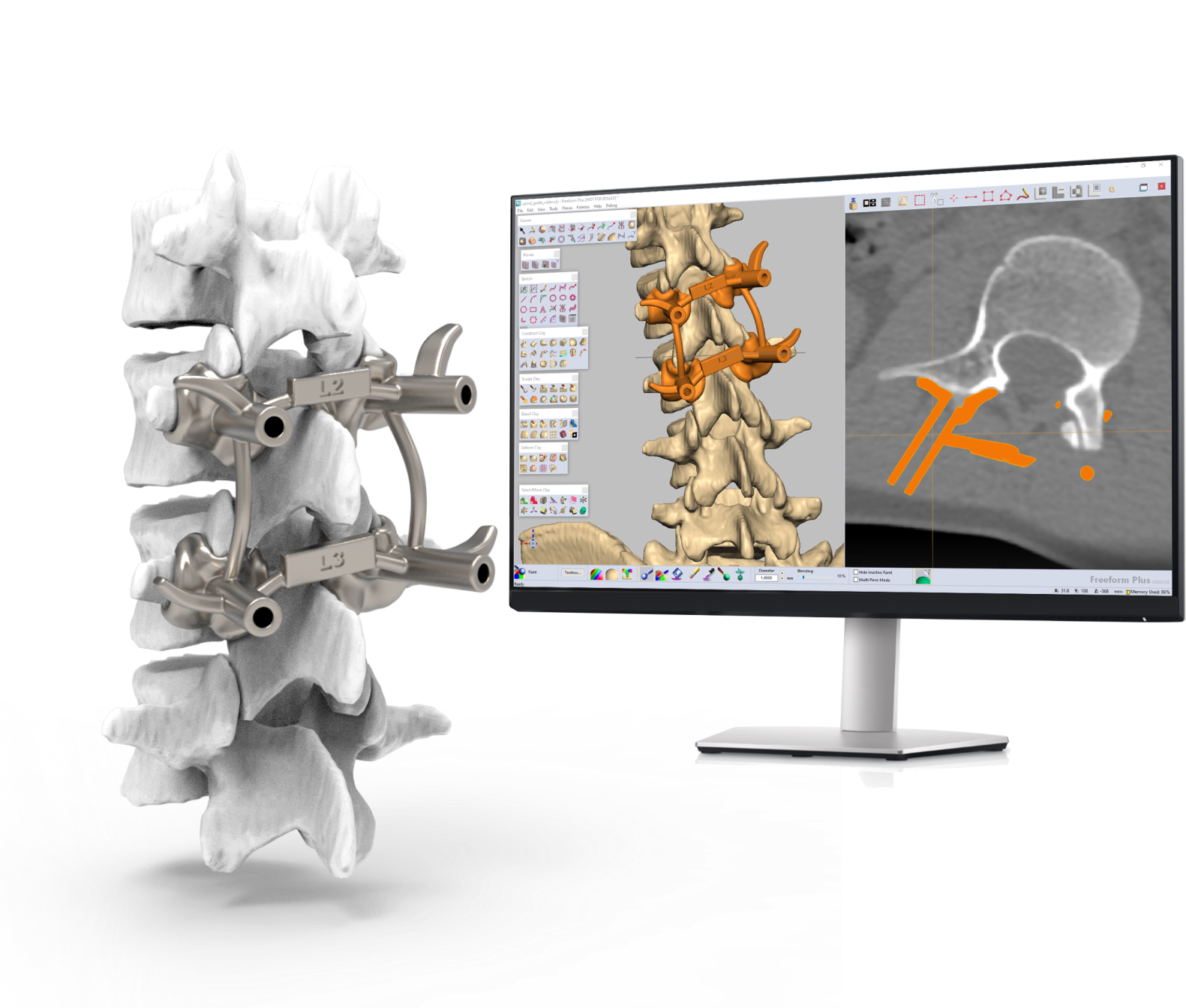
Designing around existing organic shapes is foundational to Freeform. Whether you’re working with data from industrial laser scanners, or patient data from CT scanners, Freeform makes easy work of designing around organic shapes that would be an impossibility for traditional CAD.
FAQ
-
Geomagic Freeform is used to design complex, handcrafted-style sculptural and highly organic forms that are typically too difficult or chaotic for traditional parametric CAD systems to handle. It essentially bridges the gap between artistic, artisanal design and strict digital manufacturing standards.
-
While the standard Geomagic Freeform provides a comprehensive organic design, scan processing, and 3D sculpting toolset, Freeform Plus includes advanced manufacturing and tooling features. The Plus version adds capabilities such as SubD-to-NURBS conversion, complex draft analysis and correction, automated mold parting line generation, and advanced CAD solid/surface tools.
-
Yes, it is designed to handle massive datasets produced by modern non-contact 3D scanners. It also features direct software integration with hardware like Artec 3D scanners, allowing users to capture objects directly into the Freeform workspace for immediate editing.
-
No, a haptic device is not strictly required. The software refers to the haptic interface as an "optional" hardware addition. However, using a haptic device is highly recommended because it provides physical force feedback, significantly boosting productivity by mimicking the sensation of carving real clay.